Personalised Journeys in Salesforce Marketing Cloud 2026: The Complete Practitioner's Guide
Date
Category
Marketing Automation
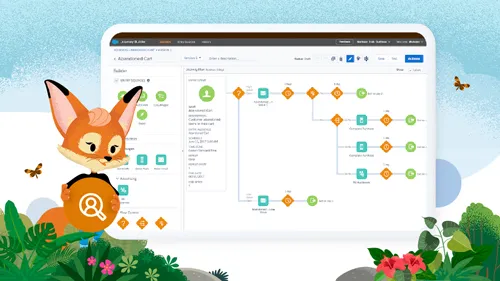
80% of customers are more likely to purchase from a brand that delivers personalised experiences. Yet most marketing automation still runs on static segments and if/then logic built for a world that no longer exists. Here's how the best SFMC teams are doing it differently in 2026.
Here's a question worth sitting with for a moment: when was the last time you felt like a brand actually knew you - not just your email address and your last purchase, but where you are in your journey with them, what you're likely to need next, and the right moment to say it? That feeling, rare as it is, is what personalised journey automation is supposed to create at scale. And in 2026, with Salesforce's Spring'26 release and the full rollout of Agentforce Marketing, the gap between what's theoretically possible and what most teams are actually building has never been wider - or more worth closing.
This isn't a beginner's overview of Journey Builder. You'll find those everywhere. This is a practitioner's guide to what's changed, what's working right now, and how to build personalised journeys in SFMC that go beyond simple email drips into genuine, contextual customer experiences - the kind that compound over time and actually move revenue.
What "Personalised Journey" Actually Means in 2026 - and What It Doesn't?
Let's clear something up. Putting a customer's first name in an email subject line is not personalisation. Sending a birthday discount is not personalisation. These are table stakes that every platform has done for a decade. Real personalisation in 2026 means something structurally different - it means your customer's behaviour, context, and history actively change the journey they're on, in real time, without a marketer having to manually intervene.
The shift is from rule-based automation (if they opened this email, send them that one) to behaviour-driven orchestration - where browsing activity, engagement timing, product interest, and service interactions dynamically influence what content is delivered next. As Salesforce Ben's 2026 analysis of Agentforce Marketing explains, this moves marketers away from scheduled batch thinking toward continuous responsiveness. The first is a workflow. The second is a journey. SFMC's Journey Builder, when properly configured with Data Cloud and Agentforce, can do the second. Most teams are still building the first.
According to Salesforce's State of the Connected Customer report, 80% of customers are more likely to purchase from a brand that personalises their experience. The marketing automation market is projected to grow at 12% CAGR through 2034.
The Architecture Behind a Personalised SFMC Journey
Before building anything, it's worth understanding the three-layer architecture that separates a sophisticated SFMC journey from a basic one. Most teams only operate on the first layer.
Layer 1: Data foundation
This is where contacts exist in data extensions, segments are built manually or through scheduled SQL queries in Automation Studio, and journey entry is based on static lists. It works, but it's batch-and-blast thinking dressed up as automation. Contacts enter a journey based on who they are at one moment in time - not how they're behaving right now.
Layer 2: Behavioural triggers
Journeys are triggered by real-time events - a website visit, a form submission, an API event from your CRM or commerce platform, a purchase, or an email engagement pattern. Salesforce's official Journey Builder documentation outlines how entry sources use API Events and Salesforce Data Events rather than static data extensions. Decision splits are based on engagement behaviour rather than demographic data. This is where Journey Builder starts to feel genuinely intelligent.
Layer 3: Agentic personalisation
This is where Agentforce Journey Decisioning Agents enter the picture. As documented in the Marketing Cloud Next Winter '26 release highlights, these AI agents don't just route customers through predefined paths - they actively analyse each individual's current journey status, determine what adjustment or optimisation is needed, generate personalised content using GenAI based on brand tone and customer data, and trigger the appropriate next journey. The path isn't predefined. The agent decides it, within guardrails you set.
How to Build a High-Converting Personalised Journey in Journey Builder?
The most effective personalised journeys in SFMC share five structural elements that most teams miss or rush through.
1. Entry source precision
Your journey is only as good as the data that triggers it. Salesforce's Spring '26 release improved the accuracy of Data Entry Sources significantly - the "Is Updated" condition in entry criteria now compares before-and-after field values, meaning CRM object changes are detected far more precisely. This matters enormously for B2B SaaS teams where a lead's lifecycle stage update or a deal moving from one stage to another should immediately trigger a relevant journey. Previously, this was unreliable. Now it's production-ready.
2. Decision splits that go beyond email opens
Apple Mail Privacy Protection has made email open rates structurally unreliable since 2021. And yet the majority of Journey Builder decision splits still use "Has Opened Email" as a primary signal. In 2026, this is a measurement error waiting to compound. The Spring '26 release introduced Einstein Metrics Guard - a feature that identifies non-human opens and clicks by scoring bot-driven engagement using Data 360, giving you a cleaner view of true campaign performance. If your splits are built on open data, rebuilding them around click behaviour, web activity, or CRM signals should be a Q2 priority.
3. Content personalisation beyond merge fields
Cross-Object Merge Fields - now available in Marketing Cloud Next - let you pull related data into email content that goes beyond contact-level fields. A contact who attended a webinar can receive an email that references details from that webinar, their service history, and relevant product context, all in one message. Combined with Rule-Based Dynamic Content, you can now customise subject lines, preheaders, body copy, and images based on what you know about each contact in Data Cloud. This is the personalisation layer most teams are leaving on the table.
4. Multi-channel orchestration
There's a meaningful difference between sending across multiple channels and actually orchestrating across them. SFMC's Spring '26 updates expanded WhatsApp capabilities significantly: Call-to-Action URLs, product catalog messages supporting up to 30 products in 10 sections, and Marketing Messages Lite that improve WhatsApp template delivery rates by up to 5%. Combined with native SMS and email in Journey Builder, the multi-channel toolkit is now genuinely comprehensive.
5. Journey daisy-chaining
One of the most powerful and underused capabilities now available in SFMC is the ability to daisy-chain journeys together. This went GA in October 2025 as part of the Smarter Journey Orchestration update in Salesforce's official release, automatically transitioning contacts from one journey to another based on actions they took or didn't take. What this enables is a full customer lifecycle architecture: an awareness journey automatically transitions to a nurture journey when a lead reaches a certain engagement threshold, which then transitions to a sales-ready journey when specific intent signals are met.
What is Journey Decisioning Agent and When to Use It?
Journey Decisioning Agents are the most significant new capability in SFMC for personalisation in 2026. As documented in the Winter '26 release notes, rather than a marketer defining every possible path a contact might take, a Decisioning Agent is configured with goals, brand guidelines, and customer data access - and then evaluates each individual's situation to determine the optimal next step. Specifically, it can analyse journey status, trigger appropriate journey entry, create customised email or SMS content using GenAI, and deliver it through Journey Builder. The content is AI-generated but marketer-reviewed - Salesforce has maintained a human-in-the-loop design intentionally.
Is Your SFMC Journey Architecture Ready for 2026?
Are your journey entry sources using real-time API Events and Salesforce Data Events - or still relying primarily on scheduled data extension uploads?
Have you rebuilt your decision splits to move away from open-rate signals toward click, web activity, or CRM-based behavioural signals?
Are you using Cross-Object Merge Fields and Rule-Based Dynamic Content or still personalising only with first name and company?
Have you explored journey daisy-chaining for your core lifecycle stages or are your journeys still operating as disconnected campaigns?
Have you set a measurable goal in every active journey and are you tracking Goal Achievement Rate as a primary KPI?
Is Einstein Metrics Guard enabled to filter bot-driven engagement from your decision splits and reporting?
Have you assessed whether Journey Decisioning Agents are appropriate for any of your high-value or re-engagement journeys?
Final thought
The brands winning at journey personalisation in 2026 aren't the ones running the most journeys. They're the ones where every journey has a clear goal, every split is built on reliable behavioural signals, and the contact's experience feels like it's responding to them as an individual. Salesforce's Spring '26 release page outlines the full roadmap of what's coming next and the direction is unambiguously toward more agentic, more contextual, and more conversational customer experiences.
Image Source Credit: https://www.salesforce.com/in/blog/what-is-salesforce-journey-builder/
More Post

Subscribe to Our Newsletter
Join now and never miss out on our stuff again. Because you are worth it!
Copyright © Anujfolio| Designed by Anuj Chaturvedi - Powered by Framer